How to Get Into an Art Gallery: The Five-Second Curator Decision Every Artist Should Know

Sonya Sparks here. I've spent thirteen years as the owner and Chief Curator at Sparks Gallery in the San Diego Gaslamp Quarter. In that time, I have sent hundreds of rejection letters to artists. I've also signed many representation contracts and looked at thousands of portfolios and submission emails. Artists often ask me what I look for when submitting to a gallery. They want to know the secret to getting their work on gallery walls.
The truth is that it happens fast. A curator makes a decision about your work within the first few seconds of seeing your materials. If you want to go from an artist who is overlooked to one who is shown in galleries, you must understand that five-second moment when a curator looks at your work.
The Decision in Five Seconds
When I open an email or a portfolio, I look for a specific "spark" that my clients would experience. I look for a voice that is clear and mastery of technique. If the work looks like other artists I already show, the decision is easy for me to pass on that artist.
I've unfortunately had to pass on thousands of applications. When I became tired of seeing talented artists not fit the bill, I built Gateway to Galleries to teach artists how to make the decision swing in their favor when the gallery criteria are aligned. I want artists to have the knowledge to present their work with confidence.
In Gateway to Galleries, you do not have to guess what curators want. Gallery owners I interview, along with career artists, are inside the program to tell you what galleries want.
The Top Three Foundations for a Yes
Galleries need three things to say yes to your work. If one is missing, the door never opens.
1) The Curator Decision
As I mentioned, this happens all at once. It is about the gut feel of the work and whether it fits the style of the gallery. I show surreal and impressionistic work at Sparks Gallery. I look for themes like portraiture and landscape that speak to the heart. If your work does not align with the gallery's mission and curation style, no amount of talent will change the decision.
2) Professional Readiness
This is about how you present yourself. Your artist statement needs to be in your voice, and well thought out. You need a cohesive body of work, and enough pieces for an exhibition.
3) Strategic Alignment and Relationships
Art is a business built on trust. I need to know you are someone who can meet deadlines and have everything organized. I need to know what your work is all about. You must build relationships first.
The Artist Path
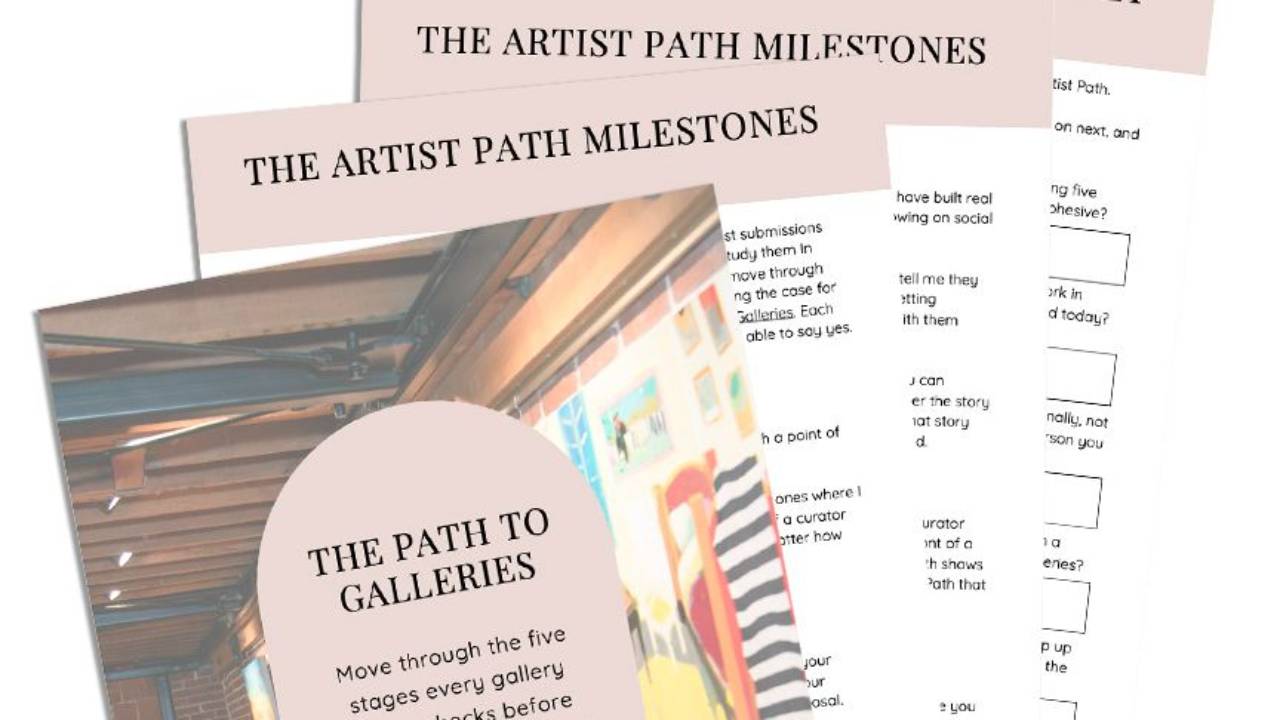
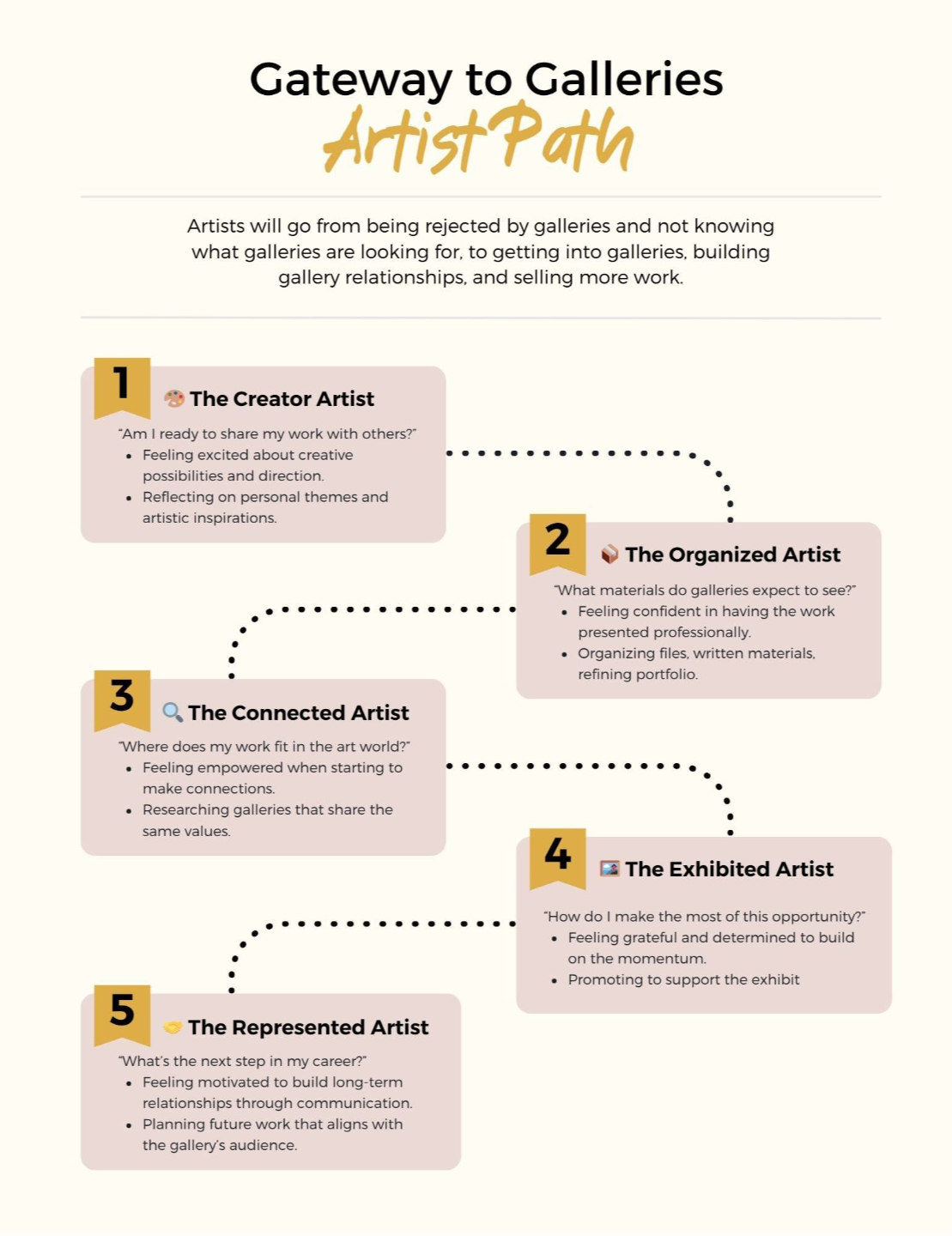
Most artists feel stuck because they do not know what is missing from their proposals. For instance, they are asking for a solo exhibit when they should be building a body of work, or they ask to be represented without any exhibition history. I use a map called The Artist Path to help you find your stage and how to fill in these gaps.
The Creator Artist
At this stage, you are in the studio making work. You might think, "Can I do this?" or "I am not gallery material." You feel frustrated and pulled in too many directions. You submit to galleries but get no response.
The Organized Artist
Now you start to catalog your work. You have high-res photos. You have a list of your pieces. You have a clear voice.
The Connected Artist
You begin to build your network. You know the names of the local curators. You go to shows. You are part of the art scene.
The Exhibited Artist
You get your work into group shows or juried exhibitions. You build a CV that shows you can sell work and attract a crowd.
The Represented Artist
This is the goal. You have a long-term relationship with a gallery. They believe in your work and help you build a career.
Case Study: From Burnout to Success - Laura Green
I want to share the story of an artist who walked this path. Laura Green was seeking guidance from many places. She wanted gallery representation, but the way forward was not clear. She felt a lot of doubt. When things slowed down, she second-guessed her talent.
Laura joined the Gateway to Galleries program. She learned which galleries to approach and how to handle rejection. The mystery went away. She stopped guessing and started working on a targeted strategy.
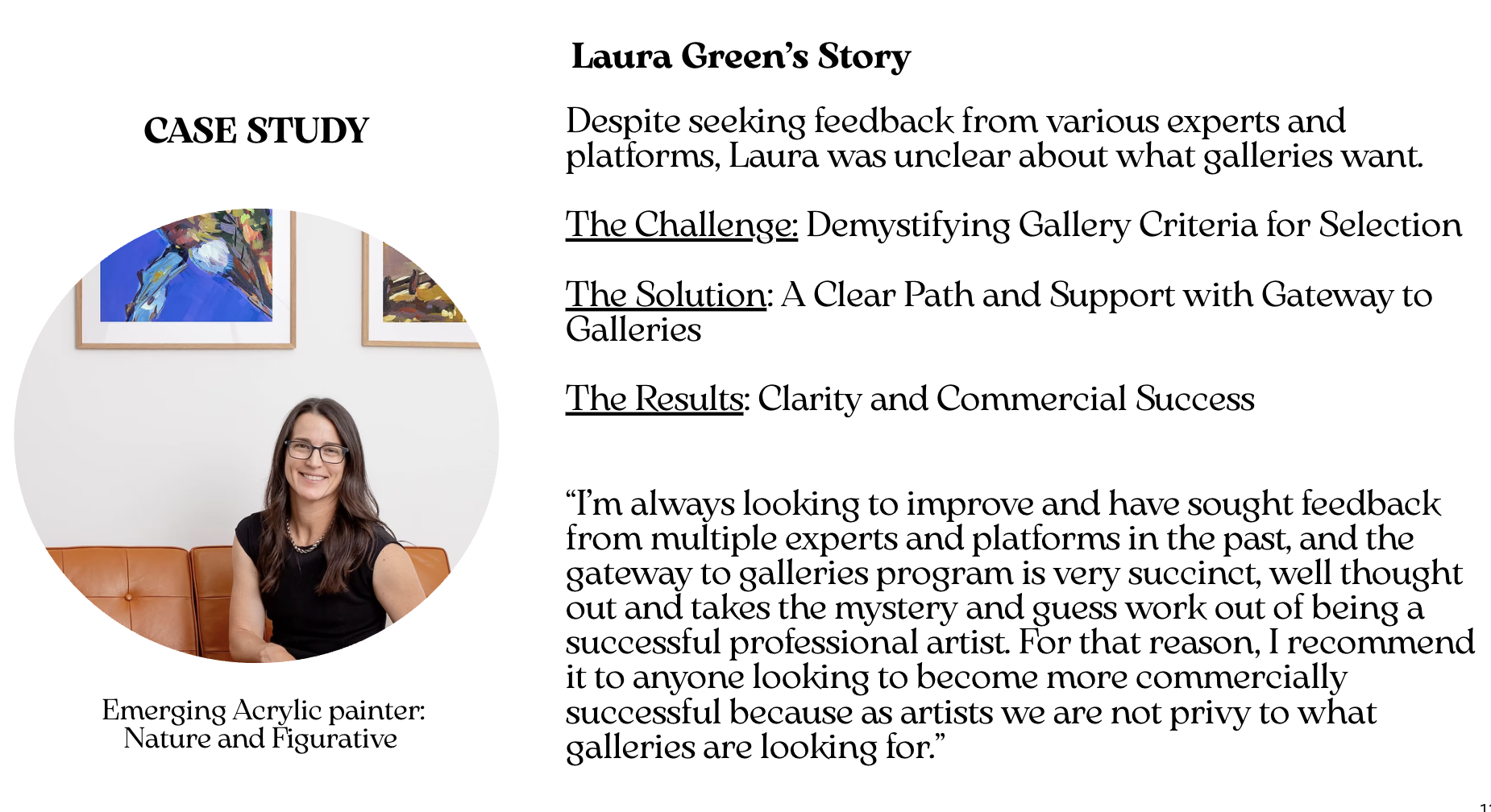
Artists are rarely told what curators look for. I know, because I was the one filling in gaps for artists for thirteen years. Laura found answers and clarity for her path forward. Now she is selling work in aligned galleries.
The Four Phases of Growth
In this membership, artists move through four distinct phases. Each phase takes about thirty days of focus.
Phase One: Creator to Organized
You clarify your body of work. This is the foundation of your career.
Phase Two: Organized to Connected
You organize your work. You learn how to talk to gallerists.
Phase Three: Connected to Exhibited
You start to build meaningful bonds in the art world. You approach the right galleries in a way that is professional and aligned with your career level.
Phase Four: Exhibited to Represented
You build the credibility that leads to long-term gallery bonds. This is where you find a home for your art.
Why Artists Hesitate
I see artists wait for years to take a step like this. They spend money on paint and canvas but not on their career. They stay stuck in the "Now" phase.
In the "Now," you feel overwhelmed and confused. You feel rejected. In the "To" phase, you feel prepared. You know you are gallery ready. You have a plan to market yourself and support the galleries that show your work.
During your first 60 days in the Gateway to Galleries program, you will see a shift in confidence, readiness, and focus. We target one stage at a time in our focused sprints when we can work together on one set of goals as a supportive and non-judgmental community of artists.
Join Gateway to Galleries
The total value of the tools and training inside this program is over $1,755, however, I want this to be accessible for artists who are serious about their craft.
As of writing, the investment for Gateway to Galleries is just $51 per month. If you prefer to pay for the year, the price goes down to $46.75 per month.
When you join, you receive more than just lessons. You watch monthly video interviews with other gallery owners and curators. They advise what they want to see from artists, and how their gallery model is set to show artists. You will know exactly what it takes to work with each one.
I offer support and feedback within the platform, with live monthly group calls, so this is not just another program that you join and hear crickets when you are inside.
If you want recognition for your work, and an audience that values your message, you need a map. The Artist Path is that map.
Start building your success path and join the monthly membership at Gateway to Galleries. I am here to help you move from overlooked to exhibited.
To your success,
Sonya Sparks
Next Steps: Take the Free 10 Minute Gallery Test
Galleries are already looking at your Instagram feed. Learn why they pass by your feed, and next steps to fix it.